Description
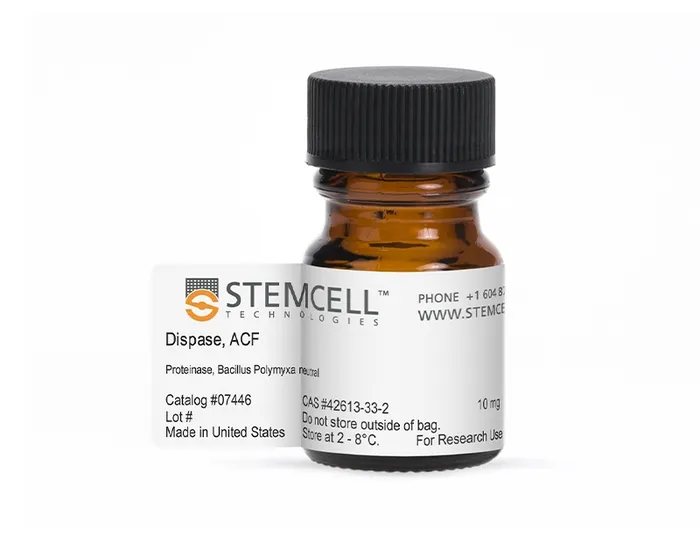
Dispase ACF (Animal Component Free) for Stem Cell Isolation
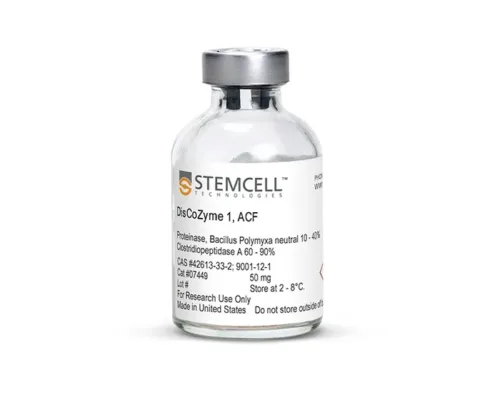
Dispase ACF (Animal Component Free) is a high-purity neutral protease enzyme specifically designed for tissue dissociation, primary cell isolation, and stem cell culture workflows. Produced using animal–component–free fermentation processes, this enzyme offers a reliable and ethically sourced alternative for laboratories requiring contamination-free reagents in advanced biomedical research.
Dispase is a mild amino-endoprotease that cleaves peptide bonds at the N-terminal side of non-polar amino acid residues. Unlike harsher proteolytic enzymes, Dispase provides controlled enzymatic digestion that allows efficient tissue separation while preserving cell surface proteins and maintaining membrane integrity. This makes it particularly suitable for the isolation and passaging of delicate primary cells and stem cells.
With a molecular weight of approximately 32.5 kDa, Dispase ACF offers consistent enzymatic activity and reproducibility in a wide range of cell culture and tissue dissociation protocols. Its gentle enzymatic action allows researchers to obtain high-quality cell suspensions without compromising cell viability or function.
Because it is produced without animal-derived materials, Dispase ACF is ideal for laboratories that require animal–component–free reagents for sensitive research applications, including stem cell biology, regenerative medicine, and advanced cell culture systems.
Key Features and Benefits
Animal Component Free (ACF) formulation
Manufactured using fermentation systems free from animal-derived materials, reducing the risk of contamination and supporting high-purity laboratory workflows.
Gentle proteolytic activity
Dispase provides mild enzymatic digestion that preserves cell membrane integrity and receptor structures, improving the viability and quality of isolated cells.
Highly effective tissue dissociation enzyme
Efficiently separates cells from extracellular matrices and basement membranes while minimizing cellular damage.
Ideal for primary cell culture
Widely used for the isolation and passaging of primary epithelial cells, stem cells, and endothelial cells.
Broad research compatibility
Suitable for use with samples derived from human, mouse, rat, and non-human primates, making it versatile for multiple experimental models.
Reliable enzymatic consistency
Carefully produced to provide consistent enzymatic performance across research batches, supporting reproducible laboratory results.
Applications in Research
Dispase ACF is commonly used in laboratories performing tissue dissociation, stem cell isolation, and primary cell culture preparation. Its mild protease activity makes it suitable for sensitive tissues where maintaining cell viability is critical.
Stem Cell Isolation
Dispase is frequently used to isolate neural stem cells, mesenchymal stem cells, and progenitor cells from complex tissues. By gently digesting extracellular matrix proteins, it allows efficient release of intact cells suitable for culture and differentiation studies.
Tissue Dissociation
Researchers use Dispase to dissociate tissues into single-cell suspensions while preserving cell surface markers important for downstream applications such as cell sorting or flow cytometry.
Primary Cell Passaging
Dispase is particularly valuable for passaging adherent primary cells where traditional enzymes such as trypsin may damage cell membranes or receptors.
Combination Enzyme Protocols
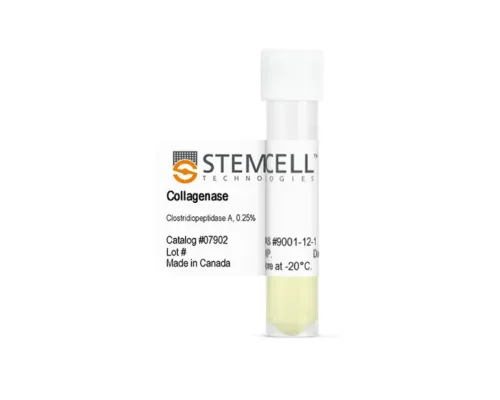
Dispase is often used in combination with collagenase or other proteases to improve tissue digestion efficiency in complex biological samples.
Common Tissue Applications
Dispase ACF has been successfully used for isolating cells from a wide range of tissues, including:
- Stem cell–derived cultures
Neural tissue
Kidney tissue
Epithelial tissue
Endothelial tissue
Lung tissue
Colon tissue
These applications demonstrate its versatility across multiple fields of biomedical research.
Product Specifications
Enzyme Type: Neutral amino-endoprotease
Subtype: Enzymatic tissue dissociation reagent
Molecular Weight: 32.5 kDa
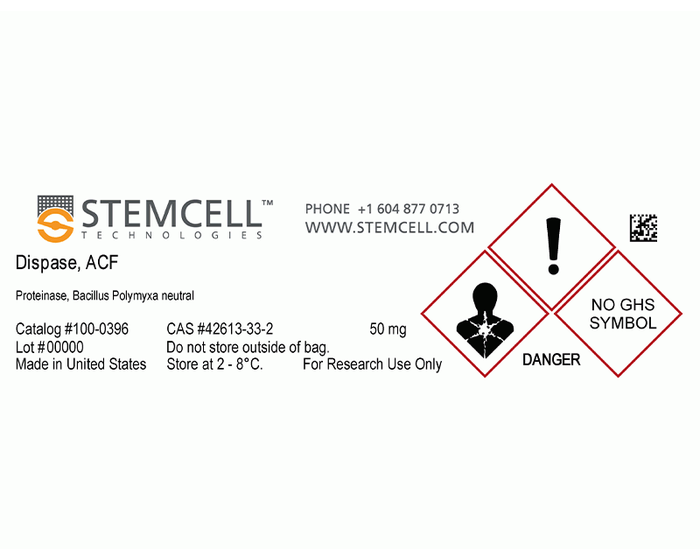
CAS Number: 42613-33-2
Applications: Cell culture, tissue dissociation, stem cell isolation
Species Compatibility: Human, mouse, rat, non-human primates, and other research models
Cell Types Supported
Dispase ACF is particularly effective for isolating and maintaining the following cell types:
Research Areas
Dispase ACF supports numerous advanced biomedical research fields, including:
Stem cell biology
Cancer research
Endothelial cell biology
Immunology
Neuroscience
In particular, it plays an essential role in workflows such as human pluripotent stem cell maintenance, mammary epithelial cell isolation, and mesenchymal stem cell sourcing.
Why Choose Dispase ACF?
Successful cell isolation depends on enzymes that can gently separate tissues without damaging delicate cells. Dispase ACF offers a balanced enzymatic activity that enables efficient tissue dissociation while maintaining cellular viability and structural integrity.
Its animal component–free formulation, reliable performance, and compatibility with multiple tissue types make it a trusted reagent for laboratories conducting stem cell research, primary cell culture, and advanced tissue dissociation protocols.
For researchers seeking a high-quality protease enzyme for stem cell isolation and tissue processing, Dispase ACF provides a dependable and scientifically validated solution.
More Details about the Dispase ACF:
Product Information Sheet
Safety Datasheet
Find More Research Products
Check out other STEMCELL Technologies Products
Dentinova Blog
Back To Store


Reviews
There are no reviews yet.