Myricetin 98% – ENPP1 Inhibitor for Tissue Healing
299.00£
Price is VAT Included
Brand: ThermoFisher
Model: ENPP1 inhibitor
Origin: USA
Myricetin 98% is a high-purity flavonoid and ENPP1 inhibitor used in tissue healing, biomaterials, and oxidative stress research. Ideal for regenerative studies, it offers strong antioxidant and anti-inflammatory properties for advanced laboratory applications (RUO).
Myricetin 98% – ENPP1 Inhibitor for Tissue Healing (Research Use Only)
A Potent Flavonoid for Regenerative, Anti-Inflammatory, and Molecular Pathway Studies
Myricetin (98%) is a high-purity, research-grade flavonoid compound widely investigated for its ENPP1 inhibitory activity, antioxidant capacity, and role in tissue regeneration pathways. With a well-defined molecular structure and strong bioactive profile, Myricetin is increasingly utilized in biomaterials, regenerative medicine, and molecular signaling research, including emerging applications in dental tissue healing and mineralization control.
This compound is supplied as a crystalline solid with ≥98% purity, ensuring reliable reproducibility and consistency for laboratory and preclinical research.
⚠️ This product is for Research Use Only (RUO): Not for human or clinical use
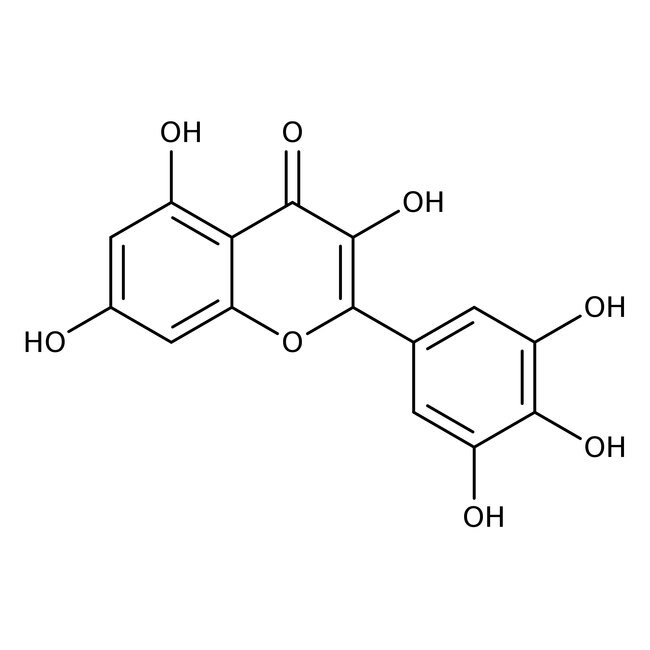
Myricetin Molecular Identity & Chemical Specifications
Myricetin is a naturally occurring polyphenolic flavonoid with a strong profile in biochemical modulation and oxidative stress control.
Its multi-hydroxyl structure contributes to strong free radical scavenging and enzyme interaction capabilities, making it highly relevant for biochemical pathway modulation studies.
Myricetin Mechanism of Action: ENPP1 Inhibition & Regenerative Potential
Myricetin has gained attention as a potential ENPP1 inhibitor, a key enzyme involved in:
Regulation of extracellular pyrophosphate (PPi)
Inhibition of pathological calcification
Control of mineralization processes
Why ENPP1 Inhibitor ( Myricetin ) Matters in Tissue Healing
ENPP1 acts as a molecular “brake” on mineralization and regeneration. Inhibition of this pathway is being explored for:
Enhanced bone and dentin regeneration
Improved biomaterial integration
Modulation of calcification-related disorders
Myricetin’s interaction with ENPP1 makes it a promising molecule for:
Dental tissue engineering research
Bone regeneration studies
Biomaterial functionalization strategies
Broad Biological Activity Profile of Myricetin
Beyond ENPP1 inhibition, Myricetin demonstrates a wide range of bioactive properties:
Antioxidant Activity
Strong free radical scavenger
Protects cells from oxidative stress damage
Supports studies in cell survival and regeneration
Anti-Inflammatory Effects
Modulates inflammatory pathways
Useful in chronic inflammation research models
Enzyme Inhibition
Myricetin98% has shown inhibitory activity against:
α-glucosidase (metabolic research)
Glyoxalase I (cellular detox pathways)
Xanthine oxidase (oxidative stress regulation)
Neuroprotective Potential
Demonstrated cell-protective effects in neuronal models
Relevant for oxidative injury and degeneration studies
Applications of Myricetin in Research & Biomaterials
Myricetin (98%) is suitable for a wide range of laboratory and preclinical applications, including:
ENPP1 inhibition studies
Tissue regeneration and mineralization research
Dental biomaterials and pulp-dentin healing models
Anti-inflammatory and oxidative stress research
Cancer and metabolic pathway studies
Drug delivery and cocrystal formulation research
Its cell-permeable nature enhances its value in in vitro and molecular studies, enabling efficient interaction with intracellular targets.
Solubility & Handling
Soluble in:
Dimethyl sulfoxide (DMSO)
Dimethyl formamide (DMF)
Ethanol
Insoluble in:
Water
Storage Conditions
Store at -20°C for long-term stability
Protect from light and heat exposure
Avoid contact with strong oxidizing agents
Proper handling ensures compound integrity and reproducibility of results.
Safety & Research Considerations
Intended Use: Research Use Only (RUO)
Not for human consumption or clinical application
May cause irritation or hypersensitivity upon contact
Use appropriate PPE (gloves, lab coat, eye protection)
Key Features at a Glance
≥98% high-purity research-grade compound
Potent ENPP1 inhibitor candidate
Strong antioxidant and anti-inflammatory properties
Relevant for tissue healing and biomaterial research
Well-characterized chemical profile
Compatible with multiple solvent systems
Reliable performance in in vitro studies
Why Choose Myricetin 98% for Research?
Myricetin stands out as a multifunctional bioactive molecule bridging biochemistry, regenerative medicine, and dental research.
Key Advantages:
Targets critical pathways in mineralization and healing
Supports cutting-edge ENPP1-related research
Offers broad applicability across disciplines
High purity ensures experimental reliability
For researchers exploring next-generation regenerative strategies, Myricetin provides a powerful, versatile, and scientifically validated tool.
Myricetin (98%) is a high-value research compound with significant relevance in ENPP1 inhibition, oxidative stress modulation, and tissue regeneration pathways. Its unique biochemical profile and versatility make it an essential molecule for advancing research in dental healing, biomaterials, and regenerative medicine. Available now at Dentinova Store.



Reviews
There are no reviews yet.